Where Did Origami Really Begin?
Fingers flying, a plain sheet of paper becomes a crane, a butterfly, or a pavilion. But where did this art of folded paper truly begin? The question has been debated for centuries—and the evidence points to China.
"Fingers flying, a plain sheet of paper can become a crane, a butterfly, or a pavilion. Origami embodies creativity with the humblest of materials—a handcraft that spans ages and borders. Yet where it truly began remains a matter of debate."
Two theories dominate popular discourse on the origins of origami: the Chinese origin theory and the Japanese origin theory.
Admittedly, most of the world's origami masters today hail from Japan, and the English word "origami" is itself a transliteration of the Japanese word for folded paper. Akira Yoshizawa's wet-folding technique gave origami finer curves and dimensionality, while classics such as Senbazuru Orikata have made Japanese origami a global benchmark. The maturity and influence of Japan's modern origami system have led many to assume that origami began in Japan.
But trace the roots, and the bud of origami art is, in fact, deeply planted in Chinese soil.
01 Papermaking
The birth of origami moved in lockstep with the development of papermaking.
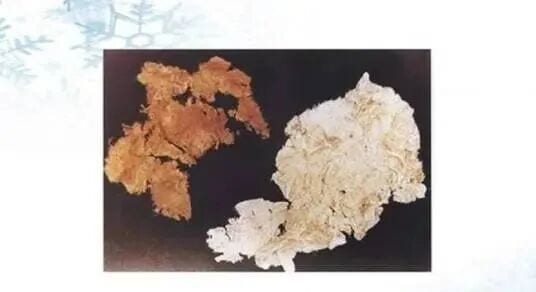
As early as the early Western Han dynasty, coarse hemp paper had appeared. A bronze mirror unearthed at Baqiao in Xi'an was wrapped in layers of folded ancient paper, whose creases bear witness to the earliest embryonic forms of origami. After Cai Lun improved papermaking in the Eastern Han dynasty, paper became increasingly common. Early origami served mostly ceremonial purposes—burial rites and sacrificial rituals. Paper clothes, paper flowers, and paper ingots became vessels for the ancients' prayers and blessings, a use recorded in many classical texts.
02 Archaeological finds
Archaeology offers the most direct support for the Chinese origin theory.
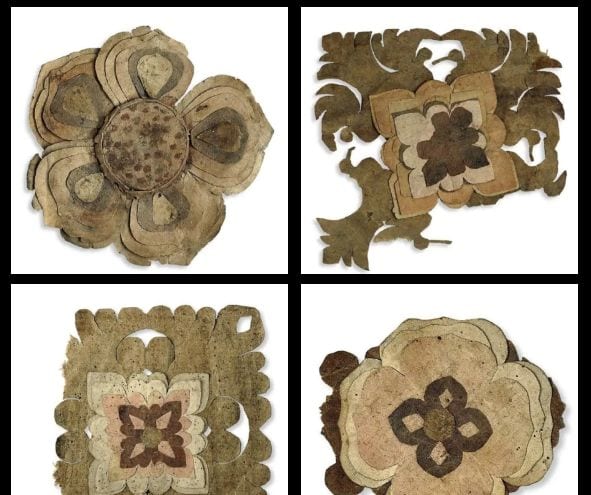
The Tang-dynasty paper flower, discovered in the Dunhuang grottoes and now held in the British Museum, was made with a combination of coiling, dyeing, and folding to mimic real blossoms. Created for Buddhist offering and ornament, it is the earliest known origami work in the world, giving tangible form to the history of Chinese origami. The paper cuttings of the Northern and Southern dynasties unearthed from the Astana cemetery in Turpan, Xinjiang, relied mainly on scissor work, yet their logic of folding and shaping is of a piece with origami technique—indirect evidence of a mature paper craft by then.
03 Written records
Written records sketch an even clearer lineage for the development of origami.
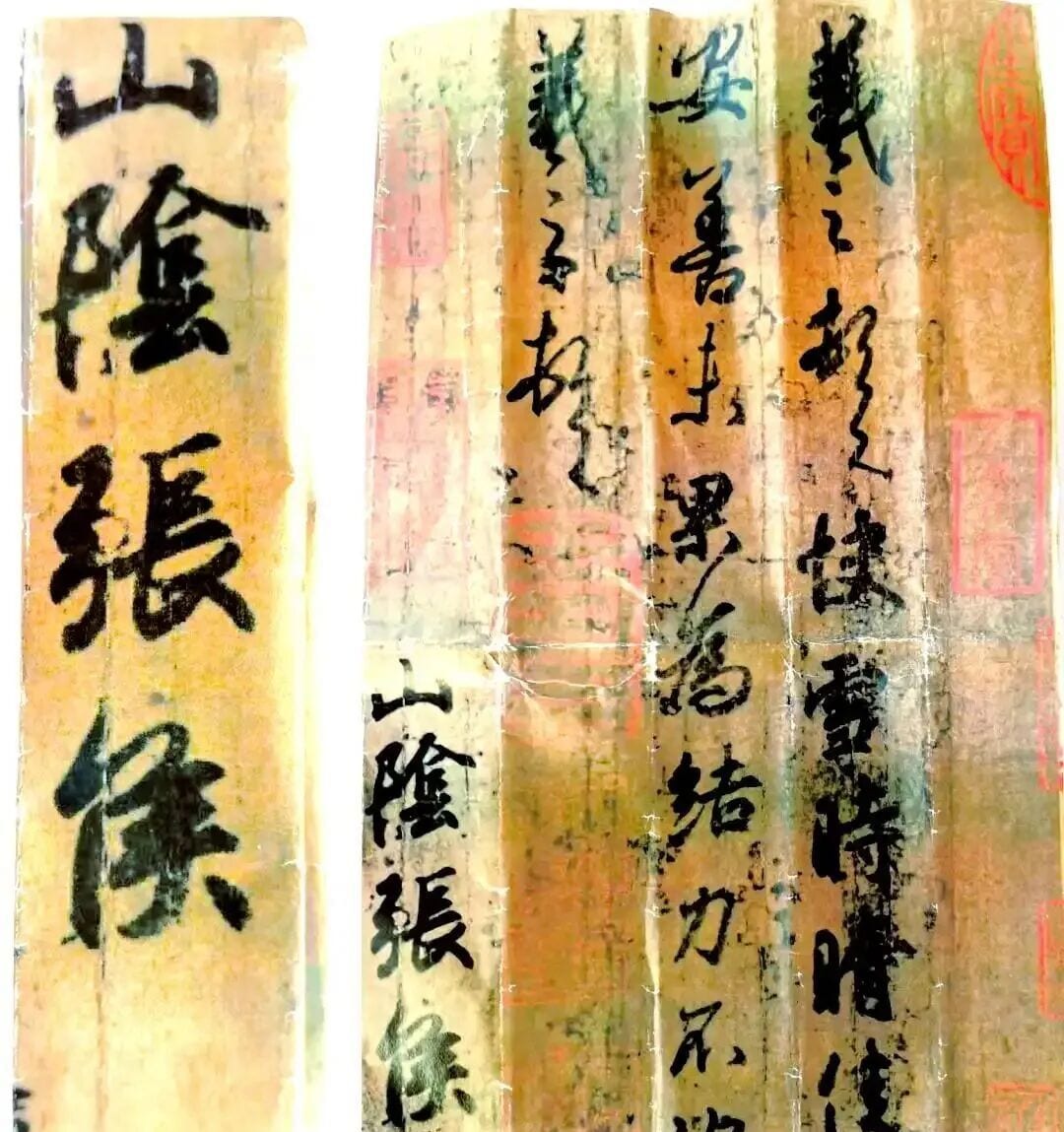
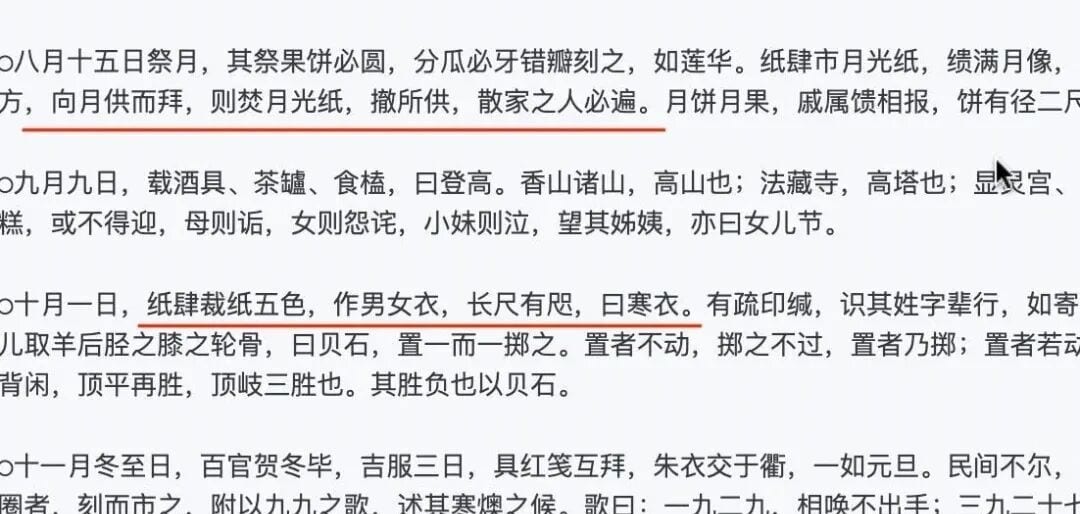
The Records of the Three Kingdoms notes that the Eastern-Jin calligrapher Wang Xizhi's Quick Snow Clearing Letter bears traces of paper folding, showing that by then origami had entered literati life. The Six Statutes of the Tang explicitly records that the Tang court employed dedicated paper-folding craftsmen to produce fine folded ornaments for decoration and ceremony—evidence of its status at the time. The Book of Southern Qi records "folding fans" in the Southern dynasties, confirming that the craft had acquired complex shaping ability. The Qing-dynasty Dijing Jingwu Lüe describes in detail the folk uses of origami—burning paper horses to honor Guan Yu, burning "moonlight paper" at moon festivals, and hanging folded-paper figures to pray for rain—revealing how deeply origami was woven into traditional culture. The folk legend of Zhang Guolao folding his donkey into his sleeve likewise artfully reflects how advanced Tang-dynasty folding had become.
In the seventh century, papermaking reached Japan via the Goguryeo monk Damjing, and "washi" paper suited to folding was born, laying the groundwork for origami in Japan. Meanwhile, origami spread westward along trade and cultural routes. After the Battle of Talas, papermaking entered the Arab world, where origami merged with geometric principles and opened the door to its mathematical and scientific exploration in the West. By the thirteenth century, European literature mentions origami; in the nineteenth century, the German educator Friedrich Fröbel introduced origami into kindergarten curricula, making it a tool of enlightenment. In the 1950s, the universal diagramming system for origami jointly established by Akira Yoshizawa and Robert Harbin broke down language barriers and carried this ancient art to the world.
Born in China, reaching across the globe—from ceremonial folding to applications spanning art, education, and engineering, a sheet of paper's thousand-year journey holds the code of civilizational exchange. Origami has never been left behind by its era; every crease is a link between the past and the future.