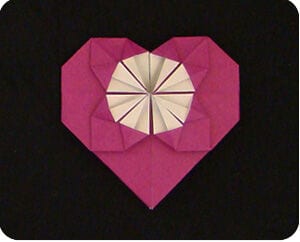
Origami Fancy Heart
Some origami hearts are flat and simple; this one has a little architecture. The fancy heart starts from an ordinary rectangle — longer than it is wide, a bill or a strip of wrapping paper both work — and earns its name with a series of squash folds that give it real depth.
It's often traced back to Stephen Hecht's dollar-bill design called Change of Heart, which is a fun bonus if you happen to have a note in your pocket. Take your time on the squash folds, repeat them patiently on all four panels, and you'll end up with a heart that stands up and shows its layers — perfect as a valentine or a tiny gift topper.
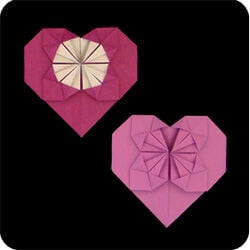
This Origami Fancy Heart is of unknown origin but is often attributed to Stephen Hecht, who published diagrams of the design folded from a dollar bill (Change of Heart). You can use any rectangle that is longer than it is wide.
Begin with the waterbomb-base preparation, then collapse the model — see the next, enlarged photo.
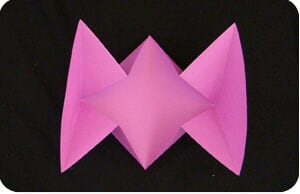
Collapse complete. See the next photo, which is enlarged.
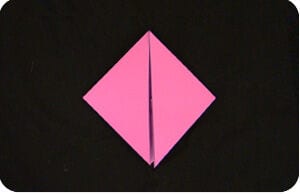
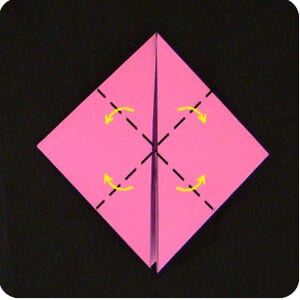
STEP 6. Fold the top-left corner of the paper towards the left corner of the model. Fold the bottom-left corner of the paper towards the left corner of the model. Repeat with the flap on the right side of the model: fold the top corner towards the right, and the bottom corner towards the right.
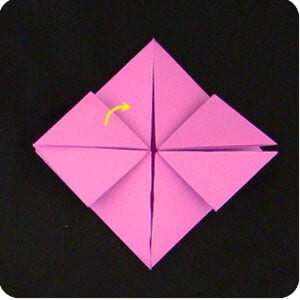
STEP 7. Work with one panel at a time. Make a squash fold: lift the top-left flap so it stands perpendicular to the model.
Pry open the two layers of paper.
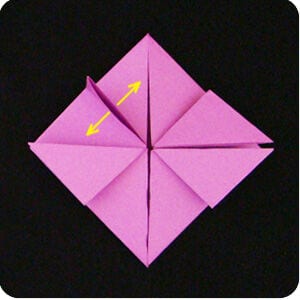
Press the paper down evenly to flatten it into a square flap.
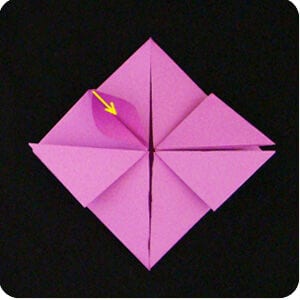
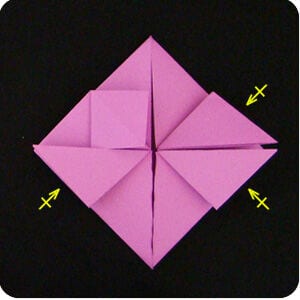
STEP 8. Repeat the squash fold with the other three panels.
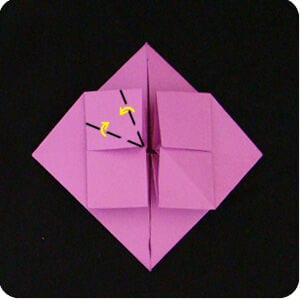
STEP 9. Work with one panel at a time. Make another squash fold: fold the edges of the paper towards the center crease.
Unfold and allow the paper to stand upright.
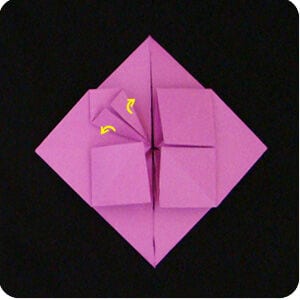
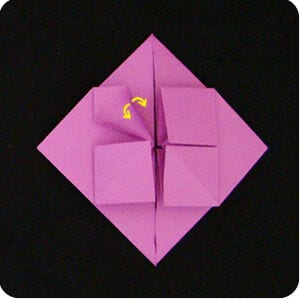
STEP 10. Pry open the two layers of paper and squash down flat.
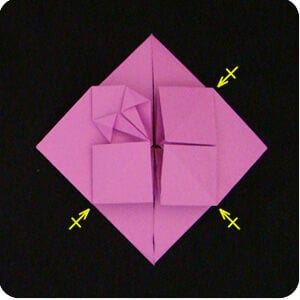
STEP 11. Repeat with the other three square flaps.
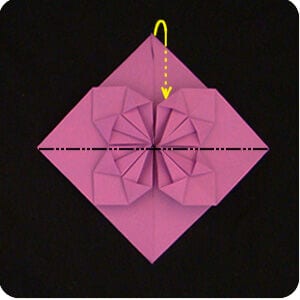
STEP 12. Fold down (mountain fold) the back layer of paper.
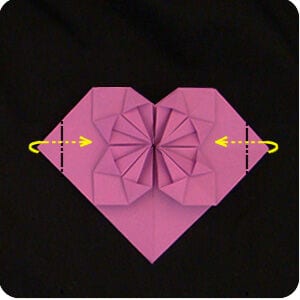
STEP 13. Make the corners less pointy by folding them back a little. The Origami Fancy Heart is done!
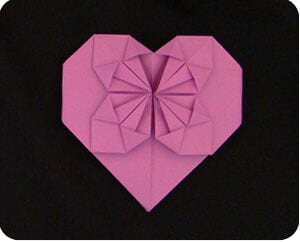
This is how the model looks if you use paper that is white on the back side.